


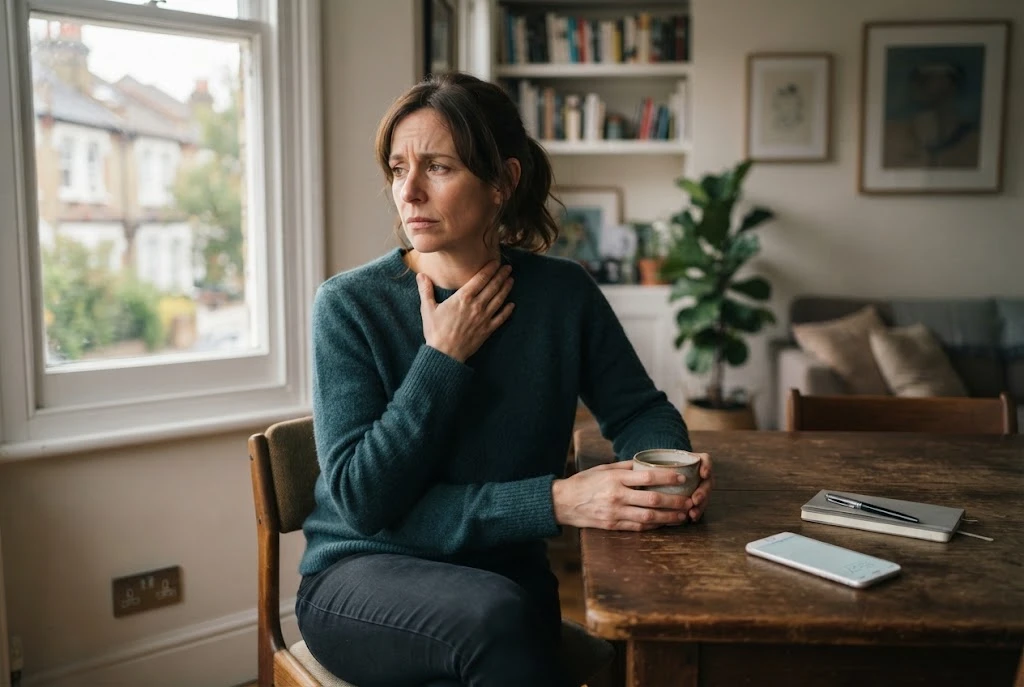
Health anxiety can make ordinary physical sensations feel frightening and difficult to ignore. You may become worried that a headache, unusual sensation, racing heartbeat or other symptom is a sign of a serious illness. Even after receiving reassurance or having medical tests, the worry can return. Learning how to manage health anxiety involves understanding the cycle of worry, checking and reassurance, while also knowing when professional support may be helpful.
Health concerns are a normal part of life, particularly when you notice a genuine change in your body. However, health anxiety can become a problem when fears about illness begin to dominate your thoughts, affect everyday activities or lead to repeated checking and reassurance-seeking.
What Is Health Anxiety?
Health anxiety describes persistent worry about having an illness or becoming seriously unwell. The concern can remain strong even when medical assessments have not identified a serious problem.
Someone experiencing health anxiety may repeatedly examine their body for signs of illness, search the internet for symptoms, ask friends or family for reassurance, or worry that a doctor or medical test has missed something. Some people may also avoid activities, appointments or information because they are afraid of becoming ill.
The NHS notes that anxiety itself can produce physical sensations, including headaches and a racing heartbeat. These sensations can then be interpreted as evidence of illness, which may increase anxiety further. Learn more about health anxiety from the NHS.
Common Signs of Health Anxiety
Health anxiety can affect thoughts, emotions and behaviour. It does not look exactly the same for everyone, but several patterns are common.
- Frequently worrying that you have a serious illness.
- Checking your body repeatedly for changes or symptoms.
- Searching online for explanations for physical sensations.
- Repeatedly asking other people whether you look or seem well.
- Seeking medical reassurance but remaining unconvinced by it.
- Worrying that doctors or tests have overlooked something.
- Avoiding activities because they might make you notice physical sensations.
- Finding that health worries interfere with work, relationships, sleep or social activities.
These behaviours can provide temporary relief. Unfortunately, the relief may not last. Once another sensation or worrying thought appears, the cycle can begin again.
How Health Anxiety Can Become a Cycle
A useful way to understand health anxiety is to look at the cycle that can maintain it.
For example, you might notice a minor headache. You then think that it could indicate a serious medical condition. Anxiety increases, making you more aware of your body. You search online, check your symptoms or ask someone for reassurance. You feel calmer for a short time, but later notice another sensation and begin worrying again.
The physical symptoms of anxiety can make this cycle particularly convincing. A faster heartbeat, dizziness, muscle tension or nausea can feel alarming when you are already concerned about your health.
Breaking this cycle does not mean ignoring genuine medical symptoms. Instead, it means learning to respond to health-related thoughts in a more balanced way while seeking appropriate medical advice when necessary.
How to Manage Health Anxiety
If you are wondering how to manage health anxiety, start by identifying the behaviours that keep the worry going. You may notice that checking, online searches or repeated reassurance provide short-term comfort but increase your focus on illness over time.
Notice Your Checking Habits
Keep a simple record of when you check your body, search for symptoms or ask someone for reassurance. You do not need to judge yourself for doing these things. The purpose is to understand your pattern.
Once you recognise the pattern, you can begin reducing unnecessary checking gradually rather than expecting yourself to stop everything immediately.
Question Anxious Interpretations
Try writing down the thought that is causing concern and then consider whether there are alternative explanations. For example, instead of immediately assuming that a headache means something serious, consider whether stress, tiredness or another ordinary explanation could also account for it.
This does not involve convincing yourself that every symptom is harmless. It means giving yourself space to consider the situation without automatically choosing the most frightening explanation.
Reduce Reassurance-Seeking
Reassurance can feel comforting, especially when anxiety is intense. However, repeatedly asking others whether you are healthy can become part of the anxiety cycle.
When you feel the urge to ask for reassurance, pause and notice what you are hoping the answer will achieve. Sometimes delaying the reassurance for a short period can help you become more comfortable with uncertainty.
Limit Repeated Symptom Searches
Health information can be useful when you need reliable medical guidance. However, repeatedly searching symptoms online can increase fear because many ordinary symptoms can be associated with numerous conditions.
Consider using trustworthy medical sources for general information and speaking with an appropriate healthcare professional when you have a genuine concern rather than repeatedly searching for certainty.
How to Combat Health Anxiety in Everyday Life
Learning how to combat health anxiety is not about eliminating every health-related thought. Everyone experiences uncertainty about their health from time to time. The aim is to prevent those thoughts from controlling your behaviour.
Returning gradually to normal activities can be helpful. If you have stopped exercising, socialising or travelling because of health worries, consider rebuilding these activities step by step where it is safe and appropriate to do so.
It can also help to maintain regular routines around sleep, meals, physical activity and relaxation. These habits cannot replace professional treatment, but they may support your general wellbeing and make anxiety easier to manage.
How to Cope With Health Anxiety During a Difficult Moment
When health anxiety suddenly becomes intense, trying to solve every possible medical concern immediately can make the situation feel even more overwhelming.
Instead, pause and identify what is happening. Notice the thought, the physical sensation and the urge to check or seek reassurance. Slow breathing or another calming activity may help reduce immediate tension.
You can then decide what action is genuinely appropriate. If you have a new or concerning physical symptom, seek suitable medical advice. If the immediate concern is primarily an anxious interpretation of a familiar sensation, give yourself time before responding through checking or online searching.
When Should You Seek Help for Health Anxiety?
It may be time to seek professional support when health worries are interfering with normal life or when attempts to manage them yourself are not helping.
A GP can discuss your concerns and help determine what type of support may be appropriate. It is important not to self-diagnose health anxiety, particularly when you have physical symptoms that have not been medically assessed.
In the UK, adults can also access NHS talking therapies directly in many circumstances without first seeing a GP. Availability and eligibility can vary depending on where you live.
Health Anxiety Therapy: What Treatment Can Involve
Health anxiety therapy can help you understand the thoughts and behaviours that maintain persistent health worries. Cognitive behavioural therapy, commonly known as CBT, is one approach that may be used.
CBT can help you identify unhelpful interpretations, understand reassurance-seeking and checking behaviours, and gradually develop different ways of responding to uncertainty.
Therapy is not about telling someone that their health concerns are imaginary. Instead, it can provide a structured way to distinguish appropriate health awareness from anxiety-driven patterns that are taking over daily life.
The NHS identifies talking therapies such as CBT as a possible treatment for health anxiety. Treatment decisions should be based on an individual’s circumstances and discussed with an appropriately qualified professional.
How to Help Someone With Health Anxiety
If you are wondering how to help someone with health anxiety, patience is important. Repeatedly telling the person that they are definitely fine may provide temporary reassurance but does not necessarily address the underlying anxiety.
Instead, listen without dismissing their fears. You can acknowledge that the worry feels real while encouraging them to seek appropriate professional support when needed.
It may also help to avoid becoming part of repeated checking or reassurance routines. For example, if someone repeatedly asks you to confirm that a symptom is harmless, you can respond compassionately while encouraging them to use an appropriate healthcare route rather than repeatedly seeking certainty from family or friends.
Helping Health Anxiety Without Ignoring Real Health Concerns
One of the most important distinctions is that managing health anxiety does not mean ignoring physical symptoms.
People can experience anxiety and genuine medical conditions at the same time. If you develop a new, severe or concerning symptom, seek appropriate medical advice. Similarly, if a healthcare professional recommends an examination, test or follow-up, follow that advice rather than assuming that anxiety explains everything.
The goal is a balanced approach: take reasonable care of your health without allowing fear to dictate every decision or turning normal bodily sensations into constant sources of alarm.
Building a Healthier Relationship With Uncertainty
Complete certainty about health is rarely possible. Everyone experiences changes in their body, and not every sensation has an immediate explanation.
For someone with health anxiety, learning to tolerate some uncertainty can therefore be an important part of recovery. Rather than responding to every worrying thought with checking, searching or reassurance, you can gradually practise allowing the thought to exist without automatically acting on it.
Progress may be gradual. Some days will feel easier than others. What matters is developing a more flexible response to health worries and getting appropriate support when anxiety begins to interfere with your quality of life.
Final Thoughts on Health Anxiety
Health anxiety can be exhausting, particularly when physical sensations and frightening thoughts reinforce one another. However, the cycle of checking, searching and reassurance-seeking can be understood and changed.
Start by noticing your patterns, challenge catastrophic interpretations, reduce unnecessary checking gradually and return to everyday activities where appropriate. If anxiety continues to affect your life, consider speaking with a GP or accessing suitable talking therapy.
Most importantly, seeking help does not mean your concerns are being dismissed. Good support can help you take your health seriously without allowing fear about illness to take over your life.
