


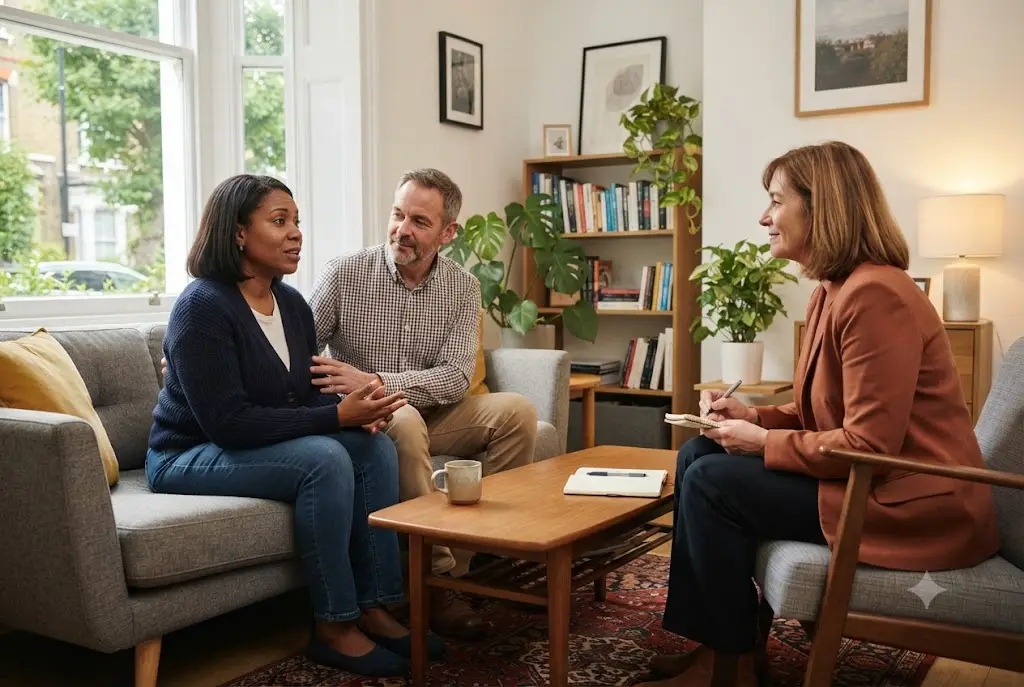
Marriage counselling offers couples a supportive environment to understand one another better, work through challenges, and strengthen their relationship. Every marriage experiences ups and downs, but seeking professional guidance can provide the tools needed to navigate disagreements, rebuild trust, and improve communication. Whether you’re facing ongoing conflicts or simply want to develop a healthier partnership, counselling can help couples create lasting positive change.
Many people mistakenly believe counselling is only for relationships in crisis. In reality, couples at every stage of marriage can benefit from learning healthier ways to communicate, resolve disagreements, and support one another through life’s challenges.
What Is Marriage Counselling?
Marriage counselling is a form of professional therapy that helps married couples address relationship concerns in a structured and confidential setting. A qualified therapist works with both partners to identify patterns, understand emotional needs, and develop healthier ways of interacting.
The focus is not on assigning blame but on helping couples better understand each other’s perspectives while working toward shared goals.
Marriage counselling may address:
- Communication difficulties
- Conflict resolution
- Trust and honesty
- Emotional distance
- Parenting disagreements
- Financial stress
- Life transitions
- Intimacy concerns
How Marriage Couples Therapy Supports Healthy Relationships
Marriage couples therapy encourages both partners to participate equally in improving the relationship. Sessions are designed to create a safe space where each person feels heard without fear of judgment.
A therapist helps couples recognise unhealthy communication patterns, emotional triggers, and recurring conflicts that may be preventing relationship growth.
Rather than focusing only on current disagreements, therapy often explores deeper relationship dynamics that influence everyday interactions.
Benefits of Marriage and Couples Therapy
Marriage and couples therapy provides practical skills that couples can continue using long after counselling sessions have ended.
Some of the most valuable benefits include:
Improved Communication
Partners learn to express feelings clearly while listening with empathy instead of reacting defensively.
Better Conflict Resolution
Arguments become more productive when couples understand how to disagree respectfully and focus on solutions instead of winning.
Rebuilding Trust
Where trust has been damaged, therapy helps couples explore the causes and develop realistic steps toward rebuilding confidence.
Greater Emotional Connection
Couples often rediscover emotional intimacy by understanding each other’s needs and strengthening everyday interactions.
Shared Problem-Solving
Rather than viewing each other as opponents, couples begin working together as a team.
When Should Couples Consider Counselling?
Many couples wait until problems have become overwhelming before seeking help. However, counselling can be effective at almost any stage of a relationship.
You may benefit from professional support if you experience:
- Frequent arguments that never reach resolution
- Difficulty communicating openly
- Emotional distance
- Loss of trust
- Major life changes
- Parenting disagreements
- Financial conflicts
- Ongoing resentment
Seeking help early often prevents smaller concerns from becoming larger relationship challenges.
What Happens During Couples Counselling?
Every therapist works differently, but most couples counselling follows a structured process.
Initial Assessment
The therapist learns about the relationship, current concerns, personal histories, and goals for counselling.
Identifying Relationship Patterns
Many couples become stuck in repeated cycles of conflict. Therapy helps identify these patterns and understand why they continue.
Learning New Skills
Sessions introduce practical techniques for communication, emotional regulation, problem-solving, and conflict management.
Applying Strategies at Home
Progress usually comes through practising new approaches between sessions.
Common Myths About Marriage Therapy
Myth: Therapy Means the Marriage Has Failed
Many successful couples attend counselling proactively to strengthen their relationship before problems become severe.
Myth: The Therapist Takes Sides
A professional therapist remains neutral and supports both partners equally.
Myth: One Session Solves Everything
Healthy relationship change develops gradually through consistent effort and open communication.
Relationship Counselling Builds Long-Term Skills
Relationship counselling goes beyond solving immediate problems. Couples develop communication habits that continue benefiting their marriage for years.
These include:
- Active listening
- Emotional awareness
- Constructive disagreement
- Healthy boundaries
- Mutual respect
- Collaborative decision-making
Marriage Therapy Can Help Through Major Life Changes
Life constantly evolves, and relationships must adapt along the way. Marriage therapy can support couples through transitions such as:
- Having children
- Career changes
- Relocation
- Financial pressures
- Health challenges
- Retirement
- Caring for ageing parents
Learning to navigate change together often strengthens the partnership rather than creating additional strain.
Supporting Communication for Lasting Success
One of the strongest predictors of relationship satisfaction is healthy communication. Couples who communicate openly tend to resolve disagreements more effectively and maintain stronger emotional connections.
If improving conversations is one of your goals, our guide on marriage communication explores practical strategies for building healthier daily interactions between spouses.
Addressing Deeper Relationship Challenges
Sometimes recurring conflicts are symptoms of larger relationship concerns. Understanding the root causes can make it easier to create lasting improvements.
For a deeper understanding of recurring relationship difficulties, read our article on marital issues, which explains common challenges couples experience and practical ways to address them.
Choosing the Right Counsellor
Selecting the right therapist is an important part of the counselling process. Look for a qualified professional with experience working with couples and an approach that aligns with your relationship goals.
You may also find guidance through professional organisations such as the British Association for Counselling and Psychotherapy (BACP), which provides information about accredited counselling professionals and standards within the UK.
Final Thoughts
Every marriage faces challenges, but those challenges do not have to define the relationship. Marriage counselling provides couples with practical tools to improve communication, rebuild trust, resolve conflicts, and strengthen emotional connection. Seeking support is not a sign of failure—it is a positive investment in the future of your relationship. With commitment from both partners and guidance from a qualified professional, many couples discover healthier ways to grow together and build a stronger, more fulfilling marriage.
