


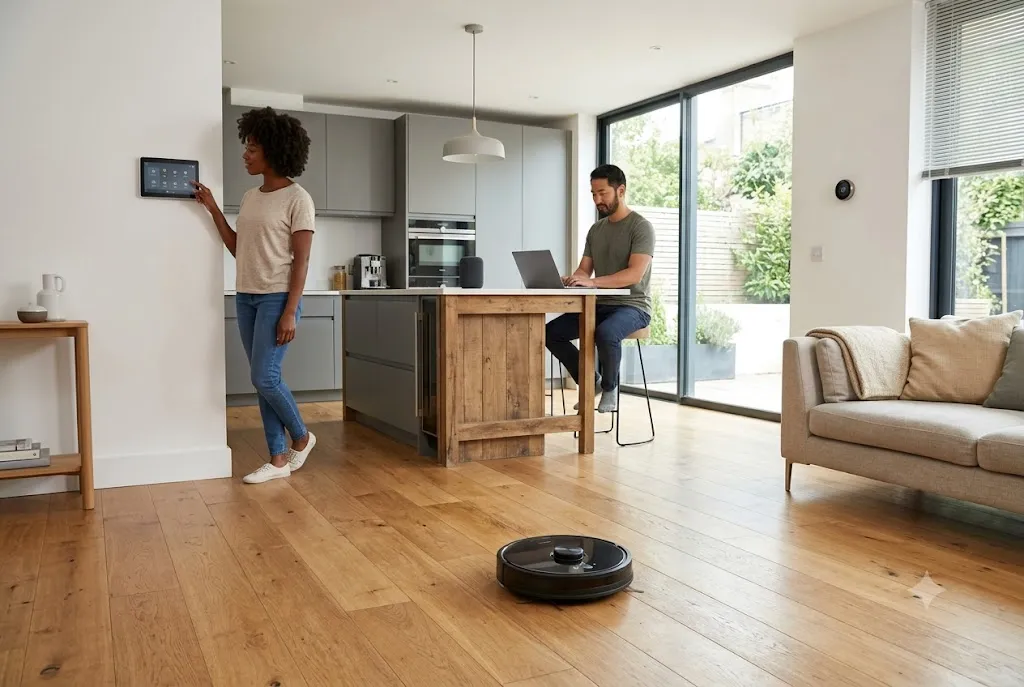
Smart home technology has evolved rapidly over the past decade, and one of the most popular innovations is the robot house cleaner. Once considered a luxury gadget, robotic cleaning devices have become increasingly common in UK households as homeowners seek convenient ways to save time and reduce routine chores.
Modern robot cleaners use sensors, mapping systems, artificial intelligence, and connectivity features to navigate homes and clean floors with minimal human intervention. As smart home ecosystems continue to expand, robotic cleaning technology is becoming an important part of connected living.
For busy professionals, families, and homeowners looking to simplify household maintenance, robot cleaners offer a practical solution that continues to improve with each generation of technology.
What Is a Robot House Cleaner?
A robot house cleaner is an automated cleaning device designed to perform household cleaning tasks independently. Most commonly, these devices vacuum floors, although many modern models can also mop hard surfaces and perform advanced cleaning functions.
Using sensors and navigation systems, robotic cleaners move throughout a home while avoiding obstacles and adjusting their cleaning patterns based on room layouts.
Unlike traditional vacuum cleaners, they require minimal user involvement after initial setup.
How Robot Cleaners Work
Modern robotic cleaning systems rely on a combination of hardware and software technologies.
Key components typically include:
- Navigation sensors
- Obstacle detection systems
- Mapping technology
- Wireless connectivity
- Rechargeable batteries
- Automated cleaning algorithms
These technologies enable the robot to navigate efficiently while cleaning multiple areas of the home.
Many advanced systems can create digital maps, identify room boundaries, and remember previous cleaning routes.
The Role of Algorithms in Robotic Cleaning
Behind every effective robot cleaner is sophisticated software designed to optimise navigation and cleaning performance.
Many of these systems depend on principles related to algorithms and data structures to organise information and determine efficient movement patterns.
Algorithms help robotic cleaners:
- Navigate rooms
- Avoid obstacles
- Optimise cleaning routes
- Manage battery usage
- Return to charging stations
- Adapt to changing environments
Without efficient algorithms, robotic cleaning systems would struggle to operate effectively in complex household environments.
Benefits of Using a Robot House Cleaner
The popularity of robotic cleaners continues to grow because they offer several practical advantages.
Time Savings
One of the primary benefits is automation. Homeowners can schedule cleaning sessions while focusing on work, family responsibilities, or leisure activities.
Consistent Cleaning
Robot cleaners can operate daily, helping maintain cleaner floors with less effort.
Smart Scheduling
Many devices allow users to create automated schedules through smartphone applications.
Accessibility
For elderly individuals or those with mobility limitations, robotic cleaning systems can reduce the physical demands of household maintenance.
Integration with Smart Homes
Robot cleaners increasingly function as part of larger smart home ecosystems.
Modern systems can connect with:
- Voice assistants
- Mobile applications
- Smart speakers
- Home automation platforms
- Connected sensors
- Security systems
This integration allows homeowners to control cleaning activities remotely and coordinate devices through centralised smart home management platforms.
Many households already using homephones with digital communication systems are also embracing broader smart home technologies that enhance convenience and connectivity.
Artificial Intelligence and Robotic Cleaning
Artificial intelligence is playing an increasingly important role in robotic cleaning technology.
AI-powered systems can analyse environmental information, recognise obstacles, and improve navigation efficiency over time.
As machine learning technologies continue to evolve, robotic cleaners are becoming more capable of adapting to different household layouts and cleaning requirements.
Developments in explainable artificial intelligence, discussed in our guide to Molnar Interpretable Machine Learning Scholar, may also influence future smart home systems by making automated decisions more transparent and understandable.
Limitations to Consider
Despite their advantages, robot cleaners are not perfect solutions for every household.
Potential limitations include:
- Initial purchase costs
- Battery limitations
- Maintenance requirements
- Performance on certain surfaces
- Difficulty with cluttered environments
- Occasional navigation challenges
For deep cleaning tasks, many homeowners continue to use traditional cleaning equipment alongside robotic systems.
What Features Should Buyers Look For?
When evaluating robot house cleaners, consumers should consider features that align with their household needs.
Important factors include:
- Navigation accuracy
- Battery life
- Cleaning performance
- Smart home compatibility
- Scheduling capabilities
- Noise levels
- Maintenance requirements
- Warranty and support options
Comparing these features can help buyers identify the most suitable device for their environment.
The Future of Household Robotics
Robotic cleaning represents only one aspect of a broader trend toward household automation.
Future developments may include:
- More advanced AI navigation
- Multi-function household robots
- Improved environmental awareness
- Enhanced voice interaction
- Greater energy efficiency
- Deeper smart home integration
As technology advances, robotic devices are expected to play an increasingly important role in managing everyday household tasks.
The Growing Smart Home Market in the UK
The UK smart home sector continues to expand as consumers adopt connected technologies that improve convenience, efficiency, and comfort.
Robotic cleaners, intelligent security systems, connected lighting, and automated communication tools all contribute to this growing ecosystem.
Many of these technologies rely on the same digital infrastructure and connectivity principles discussed in in computing technology used to connect systems and devices.
The continued growth of broadband connectivity and cloud services is expected to accelerate smart home adoption further.
Conclusion
Robot house cleaners have evolved from novelty products into practical household tools that help automate routine cleaning tasks. Through advances in sensors, algorithms, connectivity, and artificial intelligence, these devices offer homeowners greater convenience and flexibility.
As smart home technology continues to mature, robotic cleaning systems are likely to become even more capable, integrated, and accessible. For households seeking to reduce manual cleaning effort while embracing modern technology, robot cleaners represent an increasingly attractive solution.
For additional information about smart home technologies and consumer technology trends, resources from Which? can help consumers evaluate connected home products and services.
