


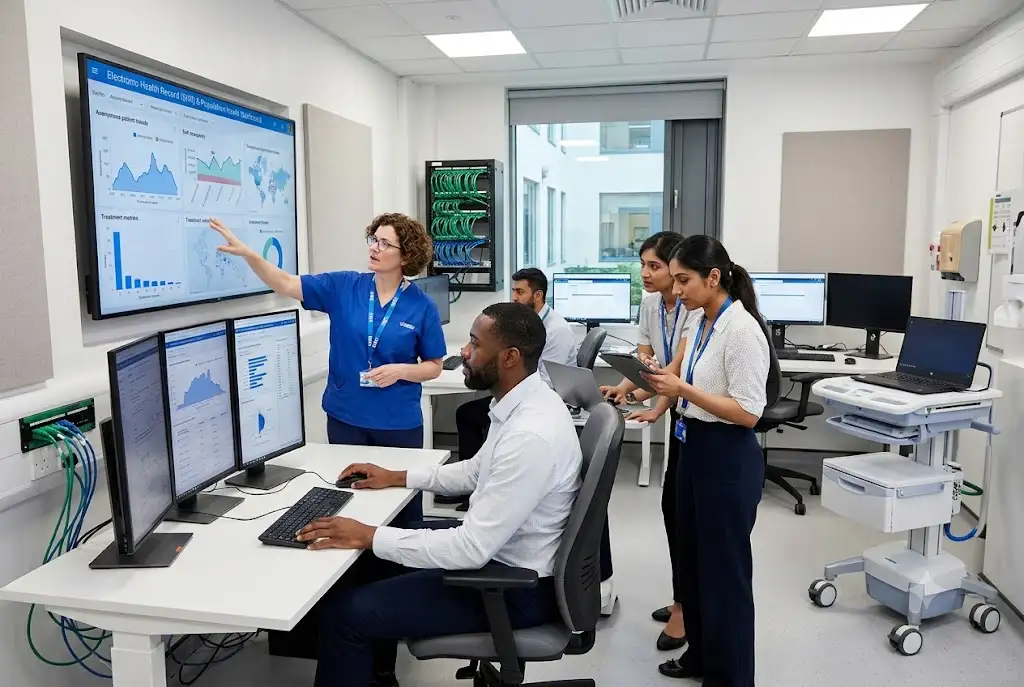
Healthcare organisations generate enormous volumes of data every day. From patient records and diagnostic reports to treatment plans and operational information, managing this data effectively has become a critical challenge. This growing need has increased interest in health informatics courses, which prepare professionals to bridge the gap between healthcare and technology.
Health informatics combines information technology, data management, healthcare systems, and analytics to improve patient outcomes, streamline operations, and support evidence-based decision-making. As healthcare providers continue investing in digital transformation, professionals with health informatics expertise are becoming increasingly valuable.
For individuals exploring technology-focused careers, health informatics represents a unique opportunity to apply IT knowledge within a healthcare environment. Understanding the foundations of modern technology, as discussed in our guide on informationstechnologie definition, can provide a useful starting point.
What Is Health Informatics?
Health informatics is the field that focuses on collecting, managing, analysing, and using healthcare data to improve patient care and organisational efficiency. It combines technology systems with healthcare processes to support clinical and administrative decision-making.
Health informatics professionals work with:
- Electronic health records (EHRs)
- Patient information systems
- Clinical databases
- Healthcare analytics platforms
- Medical coding systems
- Health information exchanges
- Digital health applications
- Healthcare reporting tools
By improving how information is stored and accessed, health informatics helps healthcare providers deliver safer, more effective, and more efficient care.
Why Health Informatics Courses Are Growing in Popularity
Healthcare systems worldwide are undergoing rapid digital transformation. Hospitals, clinics, research institutions, and public health organisations increasingly rely on technology to manage patient information and improve healthcare delivery.
This shift has created strong demand for professionals who understand both healthcare operations and technology systems.
Health informatics courses help learners develop knowledge in areas such as:
- Healthcare information systems
- Data management
- Healthcare analytics
- Clinical workflows
- Health data security
- Digital transformation
- Regulatory compliance
- Healthcare project management
As healthcare data becomes more valuable, organisations continue investing in skilled professionals who can manage and optimise digital health environments.
What You Learn in Health Informatics Courses
The curriculum varies between institutions, but most health informatics programmes combine healthcare knowledge with technical skills.
Healthcare Systems and Processes
Students learn how hospitals, clinics, and healthcare organisations operate, including patient workflows, clinical documentation, and healthcare regulations.
Information Technology
Courses often include topics such as databases, information systems, software applications, and digital infrastructure used in healthcare environments.
Data Analytics
Healthcare organisations increasingly rely on data to improve decision-making. Students learn how to collect, analyse, and interpret healthcare data.
Information Security
Protecting patient information is a major priority. Many programmes include training related to cybersecurity and data privacy.
Understanding secure technology practices is becoming increasingly important, which is why professionals often benefit from learning how organisations remain cybersecure in modern digital environments.
Masters in Health Informatics: Is It Worth It?
A masters in health informatics is often pursued by professionals who want to advance into leadership, consulting, analytics, or specialised healthcare technology roles.
Master’s programmes generally offer more advanced study in areas such as:
- Healthcare data analytics
- Strategic technology planning
- Digital health innovation
- Health information governance
- Healthcare systems management
- Research methodologies
- Clinical informatics
For individuals seeking senior positions within healthcare technology departments, a master’s qualification can provide valuable expertise and credibility.
Career Opportunities in Health Informatics
Health informatics professionals work across a variety of healthcare and technology-related roles.
Potential career paths include:
- Health Informatics Specialist
- Clinical Systems Analyst
- Health Data Analyst
- Electronic Health Record Administrator
- Digital Health Consultant
- Healthcare Technology Project Manager
- Clinical Informatics Manager
- Healthcare Information Officer
These roles often combine technical problem-solving with healthcare knowledge, making them attractive to individuals interested in both sectors.
The Role of Artificial Intelligence in Health Informatics
Artificial intelligence is becoming increasingly important within healthcare. AI-powered systems can assist with diagnostics, predictive analytics, patient monitoring, workflow automation, and administrative efficiency.
Healthcare organisations are exploring how AI can improve decision-making while reducing operational burdens on clinical staff.
Professionals interested in future healthcare technologies should also understand the wider impact of AI technology, which continues to influence healthcare innovation and digital transformation initiatives.
Technology Skills That Complement Health Informatics
Many health informatics professionals come from healthcare backgrounds, while others transition from technology-related careers.
Useful complementary skills include:
- Database management
- Data visualisation
- Project management
- Healthcare compliance
- Business analysis
- Information security
- Cloud computing
- Technology support
Professionals who combine healthcare expertise with technical certifications may strengthen their career prospects. Some choose to pursue qualifications that align with becoming a certified technology specialist to broaden their technical capabilities.
The Future of Digital Healthcare
Digital healthcare continues to evolve rapidly. Electronic health records, telemedicine platforms, wearable devices, remote monitoring systems, and AI-powered diagnostic tools are transforming how healthcare services are delivered.
As healthcare organisations continue adopting advanced technologies, demand for professionals who understand both healthcare operations and information systems is expected to remain strong.
Industry guidance from the Digital Health Network highlights the growing importance of technology-driven healthcare solutions and workforce development within the sector.
Who Should Consider Health Informatics Courses?
Health informatics courses may be suitable for:
- Healthcare professionals seeking technology-focused careers
- IT professionals interested in healthcare systems
- Data analysts entering healthcare sectors
- Healthcare administrators
- Project managers working in healthcare environments
- Students interested in digital health careers
The field offers opportunities for individuals with diverse educational and professional backgrounds.
Conclusion
Health informatics courses provide a pathway into one of the fastest-growing areas of healthcare technology. By combining healthcare knowledge with information systems expertise, professionals can help organisations improve patient care, optimise operations, and make better use of healthcare data.
Whether pursuing an entry-level qualification or a master’s in health informatics, developing skills in digital health, analytics, cybersecurity, and technology management can create valuable career opportunities in an increasingly data-driven healthcare sector.
